Octopus Red Spot Night
Octopus Red Spot Night
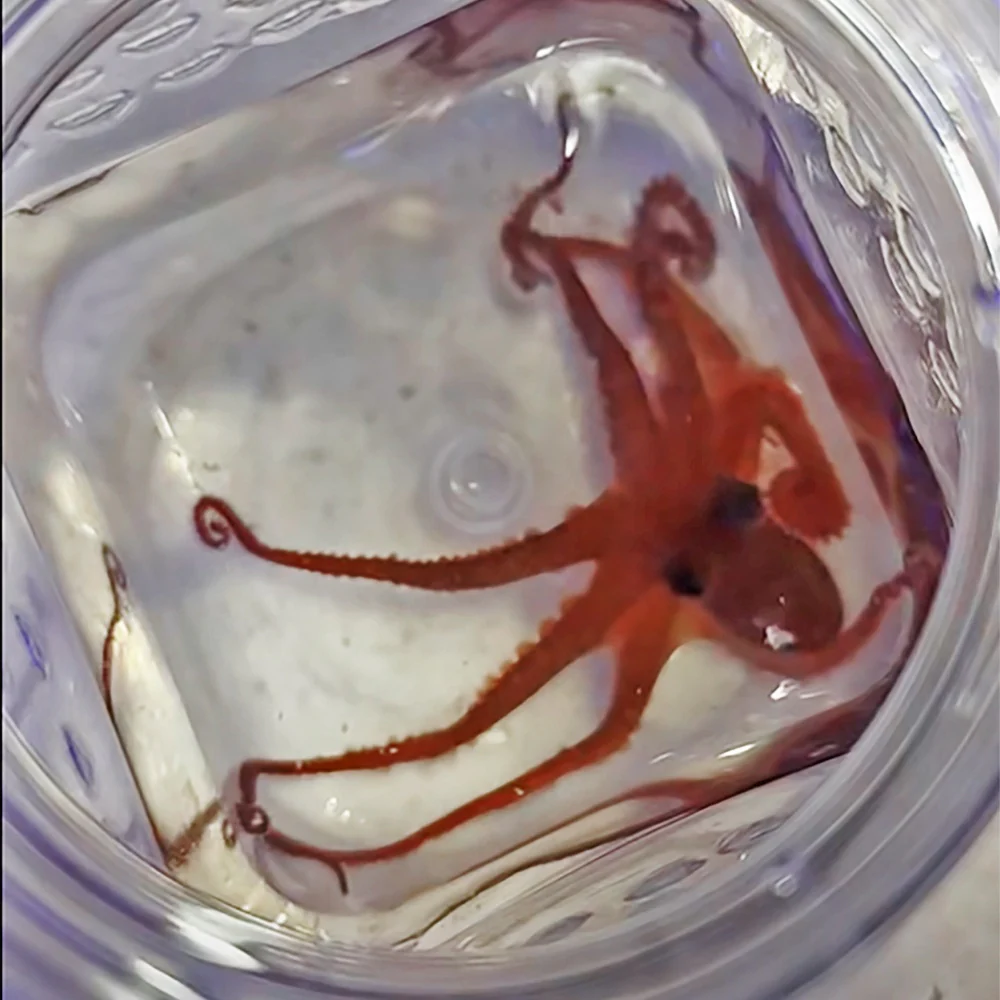
Callistoctopus dierythraeus, commonly called the Red-Spot Night Octopus, is a nocturnal cephalopod found throughout the tropical and subtropical reef systems of northern Australia. This species is recognized for its vivid orange-red coloration marked with pale white spots and its tendency to remain closely associated with a single shelter or den during daylight hours.
Key Characteristics
-
Appearance:
The species displays orange to reddish skin covered with white spots and raised papillae. Two of its dorsal arms are noticeably longer than the remaining arms.
-
Color Change Response:
When threatened or disturbed, the octopus can quickly reverse its coloration, becoming predominantly white while its red spots become more pronounced.
-
Behavior:
As a strictly nocturnal hunter, it spends the daytime concealed within rocky crevices or rubble habitats and emerges at night to prey on small crustaceans and fish.
-
Habitat and Dens:
Its lairs are commonly located in coral reef and intertidal environments. These dens are often identifiable by piles of discarded mollusc and bivalve shells surrounding the entrance.
-
Size:
Adult individuals may reach a total length of approximately 80 cm, with mantle lengths averaging around 13.5 cm.
Product Information
Product Information
Shipping & Returns
Shipping & Returns
Description
Octopus Red Spot Night
Callistoctopus dierythraeus, commonly called the Red-Spot Night Octopus, is a nocturnal cephalopod found throughout the tropical and subtropical reef systems of northern Australia. This species is recognized for its vivid orange-red coloration marked with pale white spots and its tendency to remain closely associated with a single shelter or den during daylight hours.
Key Characteristics
-
Appearance:
The species displays orange to reddish skin covered with white spots and raised papillae. Two of its dorsal arms are noticeably longer than the remaining arms.
-
Color Change Response:
When threatened or disturbed, the octopus can quickly reverse its coloration, becoming predominantly white while its red spots become more pronounced.
-
Behavior:
As a strictly nocturnal hunter, it spends the daytime concealed within rocky crevices or rubble habitats and emerges at night to prey on small crustaceans and fish.
-
Habitat and Dens:
Its lairs are commonly located in coral reef and intertidal environments. These dens are often identifiable by piles of discarded mollusc and bivalve shells surrounding the entrance.
-
Size:
Adult individuals may reach a total length of approximately 80 cm, with mantle lengths averaging around 13.5 cm.